
Showing posts with label Environmental Design. Show all posts
Showing posts with label Environmental Design. Show all posts
Thursday, October 27, 2011
National Museum of Natural History Light Installment

Sunday, April 10, 2011
Up and Down the East Coast in 2 days- Field Trip to Monticello and Falling Water
Last weekend the first year Interior Architecture students, as well as assorted other interested in design and our teachers, traveled from North Carolina to Virginia to Maryland to Pennsylvania and back- in 2 days. We began Sunday morning at 6 am, after a few sketchy give and go's from the breaks of the bus we were on the road to Monticello to visit the home of Thomas Jefferson. We pulled into the parking lot and couldn't see the house from the bus. I have been to Monticello before, but like any other important house or place, when you visit again the history seems to overwhelm you. We walked up to the visitors center and were immediately drawn to the garden and pool area in the middle of the courtyard of the area. The visitors center had a small museum and information center with quotes that appeared on the wall and letters that swam around your feet when you stepped on certain words on the floor, all referring to Thomas Jefferson quotes.
From the visitors center we took a bus to the main house. When we arrived we had to line up so that the tour guides could count groups and what not. This short downtime provided an excellent time for a few quick sketches of the interesting people around, including one woman in american flag attire that we deemed Miss America, as well as the surroundings, like the blue ridge mountain scape in which the east facade of the house faces. Our group gathered and we were greeting by a tall slender man with very circular glasses and a bow tie; he would be our tour guide. We walked up to the house and stopped outside the East Porch door. The first thing I noticed was the clock about the door, not because it was particularly noticeable, but how many people put clocks outside above their back door today? Upon learning that we could not take pictures inside, a general sound of dissapointment was heard around the group (we are the technology generation, of course).
We toured the house beginning in the corridor in the back of the house where we found the next noticeable clock, which took up most of the wall and some of the wall of the floor beneath the main floor. The clock was on a larger scale though, and was used to keep track of days rather than just hours. Also interesting to know, was that the clock was not built large enough and had to be continued to the floor below so that it could fit all seven days. The hole in the floor was just the beginning of a few afterthoughts the house held, which also included slanted ceilings to accommodate dropped ceilings meeting with higher ceilings and doors.
We moved through to the south square room, which was my favorite of all the rooms. The room looked like it could have been designed today with a vintage chic feel and fit in with design today perfectly. My favorite thing in the room were the hanging picture frames on the walls. They looked like something I could buy from Urban Outfitters and hang on my tiny apartment walls and be completely satisfied. I really enjoyed the silhouettes on the photos instead of actual photographs because they made the room more stylish in general and less about the people in the photos.
We moved through the rest of the house, observing the pink bedding on Thomas Jefferson's bed, the odd circular cut out's in the top of the wall of his side bedroom room, and the horrible yellow room located farther along in the house. We finished the house tour having learned of the thousands of books that once occupied the floors that we walked on and the string of kids that may have belonged to Thomas Jefferson via Sally Hemmings.
We finished the house tour and moved outside where we were free to roam the grounds of Monticello and explore the gardens, the cemetary, the ground floor, and the mall in front of the West Porch. It was a beautiful day so most of the class explored and then took in the sun on the lawn of Monticello, some playing frisbee and other basking in the sunlight, all of us getting the full Monticello experience.
After Monticello we hit the road again and were on our way to the University of Virginia's main campus in Charlottesville, VA, which was founded by Thomas Jefferson in 1819. We went to UVA mainly to experience their courtyard first hand, which holds a lot of precedence in the Federal architecture style created and used amongst many federal building in the US. We ate at a local Irish Pub and walked in a few stores along the main drag in Charlottesville. When we found the courtyard we were amazed to see that the buildings lining the lawn were still used for dormitories, and though the dorms were small, they were quaint and full of history and stories. The dorms were originally dorms, which is why it is so interesting that they are still used as dorms today and not especially preserved for historical value. The lawn was laid out in a style strikingly similar to that of Monticello, and rightfully so, as Thomas Jefferson dabbled both hands in both sites. The mall was a very active place for students as we observed some kind of sorority-fraternity flag football game going on in the middle of the lawn. Other students were just reading or doing homework out in the sun on the beautiful day.
From UVA we moved on towards the hotel in Maryland. The hotel was old and rustic, with customized rooms, with varying wall paper and decorations in each room. It had lamp fixtures that were electric but had an old timey- oil burning feel to them. The dining room in the main house had more of a dated feel than the rooms themselves, with more old lamps on the wall and wooden tables in a dining room that looked like it may have been updated once since opening.
We left the hotel and went to Falling Water, the Frank Lloyd Wright House in Bear Creek Pennsylvania. Upon arriving we noticed the odd shape of the visitors center and ticket area. Sparking our interest, we divided into ten person groups to tour the house. The house was very interesting in design- even more interesting that Wright was so set on his design and what he wanted that he and the Kaufman's often argued, leaving Wright not getting to choose everything, like the kitchen decor, the kitchen table chairs, or having his own chairs all around the house. Though confusing from the outside, the house is seemingly easily navigable, and it was just fun entering every room and seeing the interesting tough Wright added to each space. My favorite thing about the house was the wading area adjacent to the living room, because really, who can walk to the river from their living room couch?
http://www.billemory.com/blogimg/ca0623-monticello-clock.jpg
http://classroom.monticello.org/assets/620x/00000040.jpg
http://classroom.monticello.org/assets/620x/00000050.jpg
http://www.bc.edu/bc_org/avp/cas/fnart/fa267/jeffersn/uva1.jpg
 |
| Clock located above outside door |
 |
| Week Clock Located in Corner |
 |
| South Square Room |
We moved through the rest of the house, observing the pink bedding on Thomas Jefferson's bed, the odd circular cut out's in the top of the wall of his side bedroom room, and the horrible yellow room located farther along in the house. We finished the house tour having learned of the thousands of books that once occupied the floors that we walked on and the string of kids that may have belonged to Thomas Jefferson via Sally Hemmings.
 |
| View of West Porch From Lawn |
 |
| UVA Mall |
 |
| Original Dorms at UVA |
 |
| Mall with View of Side Buildings |
From UVA we moved on towards the hotel in Maryland. The hotel was old and rustic, with customized rooms, with varying wall paper and decorations in each room. It had lamp fixtures that were electric but had an old timey- oil burning feel to them. The dining room in the main house had more of a dated feel than the rooms themselves, with more old lamps on the wall and wooden tables in a dining room that looked like it may have been updated once since opening.
 |
| Falling Water from Walkway |
 |
| View of wading area from outside |
 |
| Falling Water from afar |
http://www.billemory.com/blogimg/ca0623-monticello-clock.jpg
http://classroom.monticello.org/assets/620x/00000040.jpg
http://classroom.monticello.org/assets/620x/00000050.jpg
http://www.bc.edu/bc_org/avp/cas/fnart/fa267/jeffersn/uva1.jpg
Monday, February 21, 2011
Social Networking Story.
Social media is the way people live, network, and communicate in the world today. In 2.5 seconds you can find out what your best friend had for lunch, or how the traffic was in a nearby city. The problem with social media is that people are limited to the networks that they already belong in, and meeting new people online is often discouraged. In 2015, the UN created a holiday in which people from all over the world are encouraged to branch out and meet others to partake in “Dining Together Day”, a day of communion and getting to know one another.
Since the mandate, the world’s social network has become a super network. At the first dinner, my friends and I invited our friends Anja from Russia, Samantha from S. Africa, Tash from Wales, and Tatiana from Columbia to dinner. My friends and I met the girls at a summer camp in Hendersonville, North Carolina, while the girls were working abroad, most of them for the first time in the US.
The space used for the dinner was hard to find, but perfect for the occasion. The round dining table helps every person to face each other, unlike a rectangular table, where one would be directly facing the person in front of her. The circular table helps generate more conversation, as we all seem to notice more about the people sitting around the table, and less about the one centered in front of us. The booth like seating makes the formal event seem a little more casual; every one is comfortable and the comfy cushions seem to push everyone together a little closer. The sunken in table-booth makes for a really interesting view of outside through the floor to ceiling windows, and when its clear outside you have the best view of the sky without even having to look up. Luckily, the table opens up to the fireplace, where the Wind-Oh television-networking screen is placed over the mantle. The screen allows for everyone unable to attend physically, to still participate through a live web cast. The cameras on the screen allow those unable to attend to view the dinner, even zoom around the table to see each persons face, their food, their dress, etc.
Since the first dinner, we have only branched out. Though we still talk to the same friends from summer camp, our friends overseas have introduced us to their other friends via the Wind-Oh, making a friendly dinner of close friends become a communion between social networks. Now, five years later, our dinners have become social networking galas. We take time to meet those that we are dining with overseas. We introduce ourselves, our food, talk about clothing, world happenings; all seemingly normal, like we are all just friends meeting up for a casual dinner around a big circular table on a comfy couch. And that we are.
Monday, February 7, 2011
Color Week
The week of Jan 24-28, 2011 was color week in the first year Iarc studio! We had daily projects working with our newly ordered and always expensive color aid paper. Here's how they turned out!
Day One- In class we chose two colors to start off with. We then chose the color that would occur if the two colors mixed. We found the middle color by putting the two outside colors completely over the middle color and slowly pulled them apart, so as to see if he middle color contained each of the outside colors.
Day Two- We did something very similar to day one, in that we only used three colors, but this task had a slight variation. With this task, we, again, chose two colors to begin with and then find the middle color. This time the colors are set up in a cross to show the complete mixture and how to colors look separately. I think the continuance of color on each side really helps bring out each of the colors in the middle. This task was also to practice technique- cutting, rubber cementing, etc. Luckily rubber cement rubs off very easily.
Day Three- Our third task was to create another compilation of blended colors. With this task, we used 9 colors in all. We began with the middle color. We then selected 4 more colors for the 4 corners. Lastly, we found the mixtures of the middle color and each corner color.
Day Four- On the fourth day, we chose three colors and had to find a fourth color that would be the equivalent of the first three colors combined. My technique in cutting and pasting together is getting better at this point but not yet on point.
Day 5- For this task, we began with two colors, the one at the top and at the bottom. The colors are supposed to be complimentary to each other, so I chose purple and yellow. The next colors we chose were the two outside colors on the top half of the diamond, the red triangle and the blue triangle. Directly below those triangles are shades of the color, displayed in another triangle. The triangles between the top yellow triangle and the red and blue top half triangles are a mixture between the triangles that are touching. The diamond is configured so that all the colors are related to the ones they are touching. For every group of four triangles that make a large triangle, the three outside triangles combine to create the middle triangle.
Distinguishing Seasons by Color- For this task we were to chose a color palette from the diamond color palette (above) to describe each of the seasons. The design or shapes were open to what we wanted to do. My bottom left corner is representative of winter. It is dark and blue. I used blue brown and purple, with a hint of a mauve-y red. Above, in the top left, the colors are representative of spring. I tried to use some of the same colors of winter, as well as some of the colors I used in the summer palette (top right). I included green because it is commonly associated with spring (April showers bring May flowers). The summer palette (top right) have very vibrant colors. I incorporated bright vibrant colors because the summer reminds me of warmth and fun. The purple is included because it is complimentary to the yellow background. The colors used in the summer palette are yellow, orange, hot pink/red, and purple. The bottom right corner is the final color and it is representative of fall. The colors are warmer with hints of winter and summer colors. The dark shapes are a dark purple color, used to compliment the yellow background.
Overall I enjoyed color week. Having a background in art I have a casual grasp on color, mainly from mixing paints and colored pencils and other mediums to create my own colors. The main thing I struggled with was knowing what the color was that I needed, and not being able to find it. Anyways, I love Colors!
 |
| Day One |
Day One- In class we chose two colors to start off with. We then chose the color that would occur if the two colors mixed. We found the middle color by putting the two outside colors completely over the middle color and slowly pulled them apart, so as to see if he middle color contained each of the outside colors.
 |
| Day 2 |
Day Two- We did something very similar to day one, in that we only used three colors, but this task had a slight variation. With this task, we, again, chose two colors to begin with and then find the middle color. This time the colors are set up in a cross to show the complete mixture and how to colors look separately. I think the continuance of color on each side really helps bring out each of the colors in the middle. This task was also to practice technique- cutting, rubber cementing, etc. Luckily rubber cement rubs off very easily.
 |
| Day 3 |
Day Three- Our third task was to create another compilation of blended colors. With this task, we used 9 colors in all. We began with the middle color. We then selected 4 more colors for the 4 corners. Lastly, we found the mixtures of the middle color and each corner color.
 |
| Day 4 |
Day Four- On the fourth day, we chose three colors and had to find a fourth color that would be the equivalent of the first three colors combined. My technique in cutting and pasting together is getting better at this point but not yet on point.
 |
| Day 5 |
Day 5- For this task, we began with two colors, the one at the top and at the bottom. The colors are supposed to be complimentary to each other, so I chose purple and yellow. The next colors we chose were the two outside colors on the top half of the diamond, the red triangle and the blue triangle. Directly below those triangles are shades of the color, displayed in another triangle. The triangles between the top yellow triangle and the red and blue top half triangles are a mixture between the triangles that are touching. The diamond is configured so that all the colors are related to the ones they are touching. For every group of four triangles that make a large triangle, the three outside triangles combine to create the middle triangle.
 |
| Colors by Season |
Distinguishing Seasons by Color- For this task we were to chose a color palette from the diamond color palette (above) to describe each of the seasons. The design or shapes were open to what we wanted to do. My bottom left corner is representative of winter. It is dark and blue. I used blue brown and purple, with a hint of a mauve-y red. Above, in the top left, the colors are representative of spring. I tried to use some of the same colors of winter, as well as some of the colors I used in the summer palette (top right). I included green because it is commonly associated with spring (April showers bring May flowers). The summer palette (top right) have very vibrant colors. I incorporated bright vibrant colors because the summer reminds me of warmth and fun. The purple is included because it is complimentary to the yellow background. The colors used in the summer palette are yellow, orange, hot pink/red, and purple. The bottom right corner is the final color and it is representative of fall. The colors are warmer with hints of winter and summer colors. The dark shapes are a dark purple color, used to compliment the yellow background.
Overall I enjoyed color week. Having a background in art I have a casual grasp on color, mainly from mixing paints and colored pencils and other mediums to create my own colors. The main thing I struggled with was knowing what the color was that I needed, and not being able to find it. Anyways, I love Colors!
Dining Spaces Inspiration
 |
| http://creativehomeidea.com/wp-content/uploads/2010/12/A-ethnic-dining-room-for-your-morning1.jpg |
 |
| http://archinspire.com/wp-content/uploads/2010/11/creative-dining-space-eco-sensitive-furnishing-house13.jpg |
More Bench Space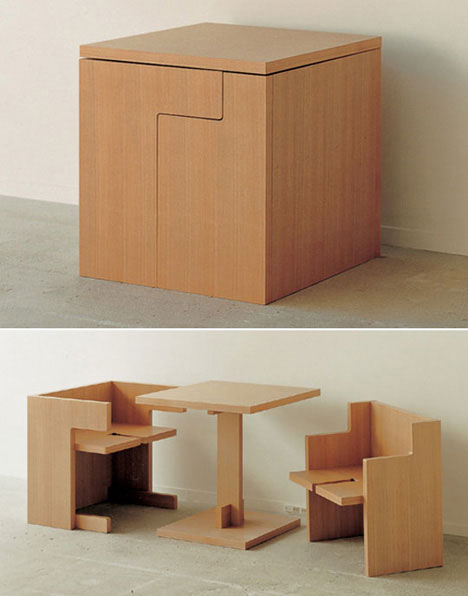 |
| http://img.weburbanist.com/wp-content/uploads/2008/08/unusual-dining-room-furniture-cube-table.jpg |

 |
| http://freshome.com/wp-content/uploads/2010/12/tribeca-modern-penthouse.jpg NYC |
 |
| http://www.sfgirlbybay.com/wp-content/uploads/2010/12/11L.jpg |
 |
| http://www.desiretoinspire.net/storage/allpostphotos/heiner-orth15.jpg?__SQUARESPACE_CACHEVERSION=1295175697866 |
 |
| http://www.desiretoinspire.net/storage/allpostphotos/heiner-orth.jpg?__SQUARESPACE_CACHEVERSION=1295175362685 |

 |
| http://www.desiretoinspire.net/storage/dining-rooms/ConDao_dining_1.jpg?__SQUARESPACE_CACHEVERSION=1295849490522 Vietnam |
Monday, January 31, 2011
Weapons of Mass Networking in North Korea
 |
| source: www.twitter.com |
Radio and television are preset to government run channels and set to recieve only govenement frequencies, with technology in place to prevent tampering. It is a serious criminal offense to tamper with the sets, or to receive North Korean radio or television programs outside of North Korea. Possessing a personal short wave radio is illegal, but confiscated radios are commnly resold by corrupt agents of the government.
In 2006 Reporters without Borders described North Korea as the world's internet blackhole, probably because internet usage in North Korea is illegal. It is limited to few government officials who have connection through secretly rented Chinese connections.
Until last year, North Korea was hardly on the social netwroking scene. North Korea's government run website Uriminzokkiri opened a twitter account and YouTube channel in July, 2010. Though not accesable by it's own people, North Korea uses the networking sites to blast the US and South Korea, among many other countries, religions, and ideas. The South Korean government blocked all access to the youtube channel and twitter account after only one week of activity.
Suspiciously, hours after the sites were blocked by the South Korean government, a North Korean facebook page was created under the name uriminzokkiri, which directly translates to on our own as a nation. The facebook page was soon blocked by the South Korean government, so as not to have it's people flooded with anti South Korea and US propaganda.
For all of the good that social networking can do-bringing people together with similar ideas, making the sharing of ideas extremely easy and accessasable for all, and doing it all peacefully and at the will of the common person, it is very sad that North Korea's government would chose to represent themselves in such a negative and bully-like manner.
sources:
http://www.cnbc.com/id/38753870/North_Korea_Takes_to_Social_Networking
http://science.discovery.com/stories/week/north-korea-social-networking.html
http://www.abc.net.au/am/content/2010/s2996087.htm
Sunday, January 30, 2011
Light Box Final
 |
| Natural Light- No Outside Light Source |

 |
| Outside Right View |
 |
| Outside Left View |


 |
| Top View |


 |
| Changed to Cloudy Setting on my Camera |

Wednesday, December 8, 2010
Up in The Clouds Luminaire Final
 |
| Front View- Focus on Clous Shape |
 |
| Full Front View- Cloud and Legs |
 |
| Side View |
 |
| Bottom View (Not visible unless lying underneath) |
 |
| Detail View of Layers- Layers were accomplished by sewing the paper together so that it overlapped to create shadows amongst thicker paper. |
 |
| Detail Side View |
Materials- Cloud: Craft Paper, Wire, Fishing Line, Pipe Holders, Wood, 2- 15 W CFL bulbs, A Few nutz and boltz and TLC
Legs: Wood, Paint
Subscribe to:
Posts (Atom)